The Asians and Whitewashing in the US Media
Shin Hee Eun
Following the rapid progress of globalization, American producers and directors of Hollywood are now able to easily access new topics and ideas that can be applied to the big screen. We can easily find that foreign cultural aspects, such as Kung Fu, have been used throughout the US media as elements that give movies “exotic” characteristics. Hollywood has gained unimaginable profit and ideas through using these kinds of cultural aspects, but the Asian and Asian American characters and actors/actresses are still not given places to represent their ethnicity and their culture even though much of their cultural aspects are being used by the American media. This whitewashing by the US media occurs simultaneously and so often that the public is slowly accepting this phenomenon as a natural thing, and this is making it harder for the audience to spot when the whitewashing is happening and whether it is okay or not okay.
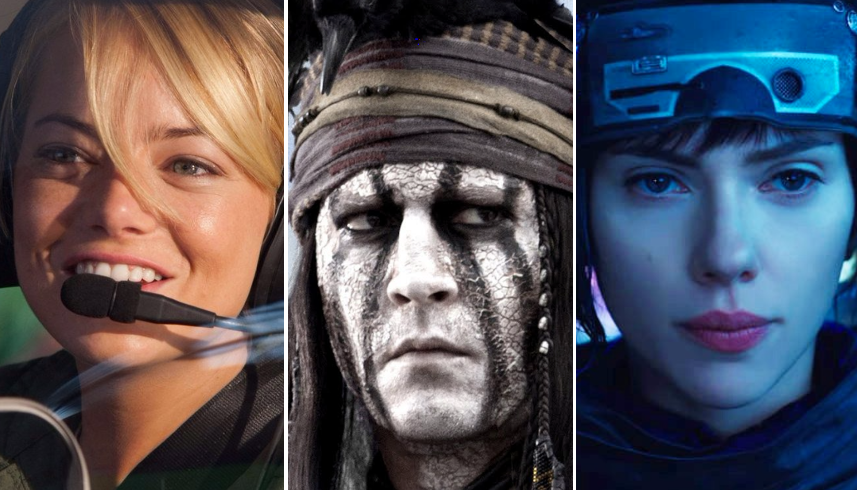
The issue regarding whitewashing first rose to surface in February of 2016 shortly after the movie Gods of Egypt was released with nearly all white actors and actresses depicting the Egyptian gods. Whitewashing has received more attention with the accusation of whitewashing in the casting of the film Ghost in the Shell and Dr. Strange. The casting of American actors such as Scarlett Johansson, Michael Pitt, Juliette Binoche as Japanese characters in the film Ghost in the Shell, an American film based on the Japanese manga of the same name, enraged the fans of the original series. Shortly after news regarding the Ghost in the Shell, the official trailer of Dr. Strange was released, and many fans of the comic book, especially the Asian and Asian American fans, criticized that the casting of the Scottish actress Tilda Swinton to portray a male Tibetan monk and sorcerer was a case of whitewashing.
As these controversies have directed much of the public’s attention towards the issue of whitewashing, many have referred to whitewashing as casting Western actors and actresses to play non-Western characters and/or changing the ethnicity of a non-Western character to hire Western actors and actresses. But there is something more to whitewashing then what is being said. In the book Asian Americans and the Media, the authors Ono and Pham mentions Margaret Cho and her experiences while working on All- American Girl, the first American TV show featuring an Asian family. The book brings in a story about an instance where Margaret Cho, and her depiction of Asian Americans were not “Asian enough” for the US audience, and how the network tried to change her so that she would be “more Asian” by applying offensive and misleading stereotypes to the sitcom’s jokes. Ono and Pham calls the network’s misrepresentations of Asians and Asian Americans as “inadequate white-washed version of Cho’s life”. In this case, the whitewashing does not necessarily replace Asian characters and/or actors with Western characters and/or actors. Instead, it is carried out through misrepresenting Asians by purposely manipulating the Asian characters’ actions and dialogues to depict not what Asians are really like, but what non-Asians think of Asians as.
Whitewashing excludes and misrepresents Asians in terms of other ways than just visual factors. Common stereotypes often involve non-physical features to make sure that the Asian character’s “Asianness” is what the Western audience expects to see. Funny accents, strict parents, exotic women, desexualized men, bad drivers are all examples of the misleading stereotypes of Asians and Asian Americans that carry negative connotations. And these stereotypes are often the subjects of jokes in American comedies mainly through television. For example, Fresh Off the Boat revolves around a rebellious main character who longs for the American culture and has a Caucasian love interest, a very strict mother, an easy-going father, a grandmother who speaks English either somewhat or not at all, and the typical “all A student” siblings. Another example is Rajesh (Raj) Koothrappali, a character in the show The Big Bang Theory. Raj is seen with a very heavy Indian accent and is portrayed to be very asexual. Raj has selective mutism, which does not allow him to talk to women outside of his family unless he was under influence of alcohol or medication, and is often depicted as overly feminine. He likes cocktails, romantic comedy movies which are all aspects that emasculate him, removing his character from being considered as a sexual competition to the rest of the male leads. Another cultural stereotype Raj often deals with is that his parents are always rushing him to get married, and tries to arrange a date, even a marriage.
Although the evidence of whitewashing may not be as explicit as it was in the 1900’s as seen with Yellowfaces, it is still evident that the exclusion of Asians and Asian Americans on US media is still ongoing. To pause these long-lasting misrepresentations, the Asian and Asian American actors, directors, producers and numerous organizations and communities must speak up and resist the silent oppression that has been pushing them away from the various chances of featuring in shows and films, and try to work with, not for the large media conglomerates. But this solution cannot take place from the effort of just one side of the industry. The studios and network conglomerates must also make effort to enforce positive and relatable images of Asians and Asian Americans, possibly through the Asian independent media. To gain more attention, the Asian actors and actresses must try to take parts that are more interchangeable in terms of race, and push away the common stereotypical characters in their work. The studios and networks can also co-produce and finance films and shows with other successful studios and network conglomerates of other Asian nations in order to assure financial success of their products and avoid losses.
Countering such widely accepted and approved misleading stereotypes will be hard, and obviously will not take place overnight. But when the mainstream media comes to admit that their representation of Asians and Asian Americans are wrong, and offer help to those who wish to shift those misleading images, the viewers will naturally change their perspectives on issues regarding diversity in US media and will be able to point out the faults in the films and programs they watch, leading to a change in the taste and expectations of the public, as well as the producers’ inclination to respect the original stories and characters’ ethnicities.